- Mens Health Secrets
- Posts
- The 3-second gap that saves relationships ⏱️
The 3-second gap that saves relationships ⏱️
Frankl's concentration camp discovery stops rage instantly ✋

Federick Gonzalez
February 06, 2026

Hey man,
Today we dive deep down the rabbit hole.
Let's time-travel back to 1944.
Auschwitz concentration camp.
Viktor Frankl watches a Nazi guard beat a fellow prisoner...
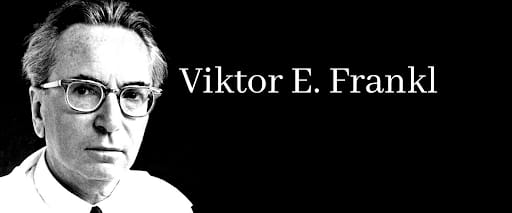
Father of Logotherapy & “The Gap”
His body floods with rage...
Every muscle screams to fight back...
But then something extraordinary happens.
In that split second between feeling and action...
Frankl discovers something that would save millions of lives [1].
Including yours.
He called it "The Gap."
That tiny space between stimulus and response...
That's ... where your power lives.
Where you choose what to say ... or not say ...
where you choose what to do ... or not do ...
where you choose who you become.
Think of it like the pause button on your remote control...
Except this one works on your life. ⏸️
Think Adam Sandler's movie Click. [7]
Here's the thing...
Most men live on autopilot:
Wife or girlfriend criticizes → Instant defensiveness
Kid talks back → Immediate anger
Boss disrespects → Rage explosion
No gap.
No choice.
No control.
Just reaction after reaction...
Like a pinball bouncing between bumpers.
But what if you had 3 seconds to change everything?
Meet David...
A 45-year-old cop in Miami, Florida ...

Miami Harbor
20 years of high-stress situations...
Yet at home?
He was a ticking time bomb. 💣
His teenage daughter's eye roll and Tik Tok Live's ... would send him into orbit...
His wife's "tone" triggered instant warfare...
Even slow Wi-Fi made him punch walls.
Then he learned Viktor Frankl's ... "The Gap" method.
The 4-Step Gap Protocol:
Step 1: STOP 🛑
The moment you feel the emotional surge ...
Literally freeze for 3 seconds.
Like pressing pause on YOUR life.
Step 2: BREATHE 🌬️
One deep breath through your nose.
Activates your vagus nerve. [2]
Shifts you from reptile to human brain.
Step 3: OBSERVE 👁️
Notice what you're feeling.
"Anger is here" (not "I am angry").
Creates psychological distance. (See our series on Third-person self-distancing. It's a banger.)
Step 4: CHOOSE 🎯
Ask: "What response serves my values?"
Pick consciously, not reactive.
Become the author, not the victim.
David's first attempt?
Daughter rolled her eyes about curfew...
His blood pressure and cortisol spiked...
But he caught it.
STOP.
BREATHE.
"Anger is here."
CHOOSE: "What does a loving father do?"
Instead of yelling, he asked his daughter Mary:
"Help me understand why 11 PM feels too early."
His daughter's jaw dropped. 😲
First real conversation in years.
The Science Behind The Gap:
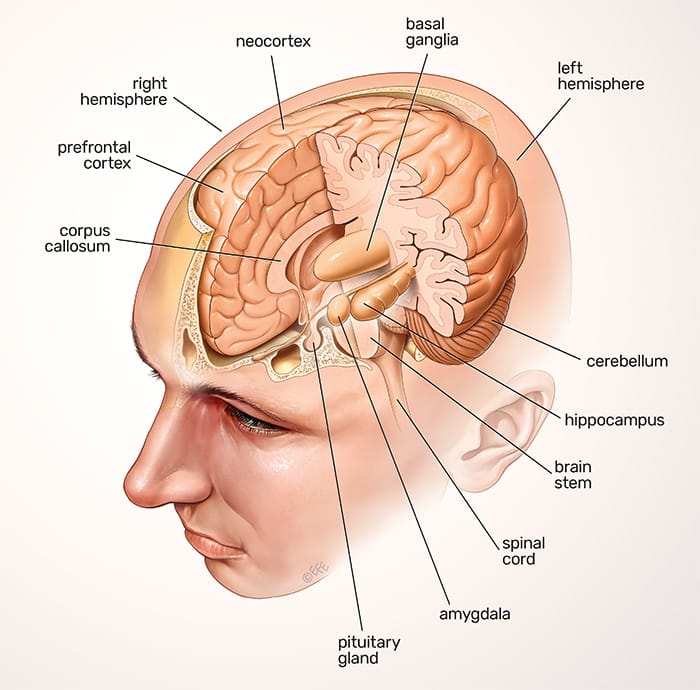
Meet your … 🧠
Your amygdala (fear center) reacts in 50 milliseconds [3]...
(between 45-74 ms ... to be exact ... for you nerds out there). [8] 🤓
Your prefrontal cortex (wisdom center) needs ~500 milliseconds... [9]
(these are "micro-moments" of awareness ... or the "space" between a stimulus and a response).
That's why you say things you regret.
The emotional brain hijacks you before wisdom arrives.
But here's what changes everything...
One conscious breath buys you 3-4 seconds. [4][10][11][12]
Enough time for your prefrontal cortex to come online...
To access your values ...
To pause between Stimulus and Response ...
To choose who you want to be.
Frankl proved this under the worst conditions imaginable... Nazi Germany.
Between stimulus and response there is a space. In that space is our power to choose our response. In our response lies our growth and our freedom.
[5]
Whoa … read that again.
That short sentence is powerful ... can save your ass ... and can empower you to finally thrive in life.
If it works in death camps...
Imagine what it does in your living room.
The Gap Variations:
The Battlefield Gap 🪖
Used by Special Forces before engagement.
3 tactical breaths: 4 in, 4 hold, 4 out.
Drops heart rate 10-15 BPM instantly
The Job Gap 💼
Before responding to criticism ... Touch thumb to fingers while breathing.
Activates executive function.

Working hard I see…
The Bedroom Gap 🛏️
When your partner triggers you ... Put your hand on your heart, feel the beat slow.
Reconnects you to love, not war.
TESTS & RANGES:
Emotional Reactivity Scale: [6]
How fast do you react to triggers?
• 0-2 seconds: Hair-trigger (danger zone)
• 3-5 seconds: Quick reactor (needs work)
• 5-10 seconds: Considered (healthy range)
• 10+ seconds: Master level
Heart Rate Variability (HRV) Test:
Measures your nervous system flexibility. [13][14][15]
• <20–25 ms: Kinda low / concerning (high stress, poor recovery).
• 25–50 ms: Below average to average (common in 40+ adults or moderate fitness).
• 50–80 ms: Solid / good (typical for fit younger-middle-aged people). This is where you wanna be dude. 💪
• 80–120+ ms: High / excellent (very fit, young, or elite recovery capacity).
The Multiplication Effect:
Here's what David discovered...
Each time you use Frankl's 3-second Gap, it gets easier.
Week 1: Caught himself 10% of the time
Week 2: 25%
Month 2: 50%
Month 6: 90%
Now?
His wife calls him "a different man."
His daughter actually asks for advice.
His squad says he's the calmest cop on the force.
All from a 3-second pause.
Your Daily Gap Training:
Morning: Set 3 phone alarms randomly.
When they ring, practice STOP-BREATHE-OBSERVE-CHOOSE.
Even if you're calm, train the neural pathway.
Afternoon: Pick one recurring trigger (Traffic, emails, fear-mongering news)
Use it as Gap practice.
Evening: Review your day.
Where did you react vs respond?
No judgment, just data.
Remember what Frankl discovered...
They could take everything from him...
His family, his freedom, his dignity...
But they couldn't take The Gap to choose ... HOW ... to respond.
... read that again.
That 3-second space where he chose meaning over misery.
Where he chose love over hate.
Where he chose to remain human.
And tomorrow?
I'll show you the crucial difference between emotions and feelings...
Why most men confuse them...
And how this confusion destroys relationships faster than infidelity.
Plus: The 90-second rule that changes everything.
(Hint: Your emotions have an expiration date most men never learn)
To your freedom in The 3-second Gap,
Mens Health Secrets
–Live Past 100
P.S. Tomorrow's email reveals why emotions only last 90 seconds... but feelings can torture you for decades. Once you understand this difference ... you'll never be emotionally hijacked the same way again.
P.P.S. Discuss any new wellness approaches with your healthcare practitioner first. This content provides educational + entertainment = EDUTAINMENT value only.
P.P.P.S. >>> Go here to subscribe to our Mens Health Secrets YouTube Channel if you haven't yet... leave a comment... and level up your Mens Health knowledge to live longer.
P.P.P.P.S New Skool.com community coming online soon. Come break "virtual bread" and level-up… with other like-minded men age 40 and up. This is your tribe. Join now. Perks of joining now? It's Free for LIFE. Price activates Q2 2026.
Medical References:
[1] Frankl, V. E. (2025). Man's search for meaning (Ilse Lasch, Trans.; H. S. Kushner, Foreword; Beacon Classics ed.). Beacon Press. (Original work published 1946/1959). https://www.amazon.com/Mans-Search-Meaning-Beacon-Classics/dp/080701883X/
[2] Gerritsen, R. J. S., & Band, G. P. H. (2018). Breath of Life: The Respiratory Vagal Stimulation Model of Contemplative Activity. Frontiers in Human Neuroscience, 12, 397. https://doi.org/10.3389/fnhum.2018.00397
[3] Méndez-Bértolo, C., Moratti, S., Toledano, R., Lopez-Sosa, F., Martínez-Alvarez, R., Mah, Y. H., Vuilleumier, P., Gil-Nagel, A., & Strange, B. A. (2016). A fast pathway for fear in human amygdala. Nature Neuroscience, 19(8), 1041-1049. https://doi.org/10.1038/nn.4324
[4] Arch, J. J., & Craske, M. G. (2006). Mechanisms of mindfulness: Emotion regulation following a focused breathing induction. Behaviour Research and Therapy, 44(12), 1849-1858. https://doi.org/10.1016/j.brat.2005.12.007
[5] Frankl, V. E. (2025). Man's search for meaning (Ilse Lasch, Trans.; H. S. Kushner, Foreword; Beacon Classics ed.). Beacon Press. (Original work published 1946/1959). https://www.amazon.com/Mans-Search-Meaning-Beacon-Classics/dp/080701883X/
[6] Nock, M. K., Wedig, M. M., Holmberg, E. B., & Hooley, J. M. (2008). The emotion reactivity scale: Development, evaluation, and relation to self-injurious thoughts and behaviors. Behavior Therapy, 39(2), 107-116. https://doi.org/10.1016/j.beth.2007.05.005
[7] Coraci, F. (Director). (2006). Click [Film]. Columbia Pictures; Happy Madison Productions. IMDb https://www.imdb.com/title/tt0389860/
[8] Wang Y, Luo L, Chen G, Luan G, Wang X, Wang Q, Fang F. Rapid Processing of Invisible Fearful Faces in the Human Amygdala. J Neurosci. 2023 Feb 22;43(8):1405-1413. https://doi.org/10.1523/JNEUROSCI.1294-22.2022. Epub 2023 Jan 23. PMID: 36690451; PMCID: PMC9987569.
[9] Xue K, Zheng Y, Rafiei F, Rahnev D. The timing of confidence computations in human prefrontal cortex. Cortex. 2023 Nov;168:167-175. https://doi.org/10.1016/j.cortex.2023.08.009. Epub 2023 Sep 5. PMID: 37741132; PMCID: PMC10591908.
[10] Little AL. The A52 Breath Method: A Narrative Review of Breathwork for Mental Health and Stress Resilience. Stress Health. 2025 Aug;41(4):e70098. https://doi.org/10.1002/smi.70098. PMID: 40792649; PMCID: PMC12341363.
[11] Xiong S, Peng M, Zhao W, Ren J, Yao D, Qin Y, Liu T. Slow-paced breathing enhancing emotional control accompanied with the change of the ∼0.1 Hz heartbeat evoked EEG. Int J Clin Health Psychol. 2025 Apr-Jun;25(2):100571. https://doi.org/10.1016/j.ijchp.2025.100571. Epub 2025 May 2. PMID: 40452884; PMCID: PMC12124614.
[12] Zaccaro A, Piarulli A, Laurino M, Garbella E, Menicucci D, Neri B, Gemignani A. How Breath-Control Can Change Your Life: A Systematic Review on Psycho-Physiological Correlates of Slow Breathing. Front Hum Neurosci. 2018 Sep 7;12:353. https://doi.org/10.3389/fnhum.2018.00353. PMID: 30245619; PMCID: PMC6137615.
[13] Nunan, D., Sandercock, G. R. H., & Brodie, D. A. (2010). A quantitative systematic review of normal values for short-term heart rate variability in healthy adults. Pacing and Clinical Electrophysiology, 33(11), 1407–1417. https://doi.org/10.1111/j.1540-8159.2010.02841.x PubMed: https://pubmed.ncbi.nlm.nih.gov/20663071/
[14] Van den Berg, M. E., Rijnbeek, P. R., Niemeijer, M. N., Hofman, A., van Herpen, G., Bots, M. L., Hillege, H., Swenne, C. A., Eijgelsheim, M., & Stricker, B. H. (2018). Normal values of corrected heart-rate variability in 10-second electrocardiograms for all ages. Frontiers in Physiology, 9, Article 424. https://doi.org/10.3389/fphys.2018.00424 PubMed: https://pubmed.ncbi.nlm.nih.gov/29755366/
[15] Tegegne BS, Man T, van Roon AM, Snieder H, Riese H. Reference values of heart rate variability from 10-second resting electrocardiograms: the Lifelines Cohort Study. Eur J Prev Cardiol. 2020 Dec;27(19):2191-2194. https://doi.org/10.1177/2047487319872567. Epub 2019 Sep 9. PMID: 31500461; PMCID: PMC7734556.